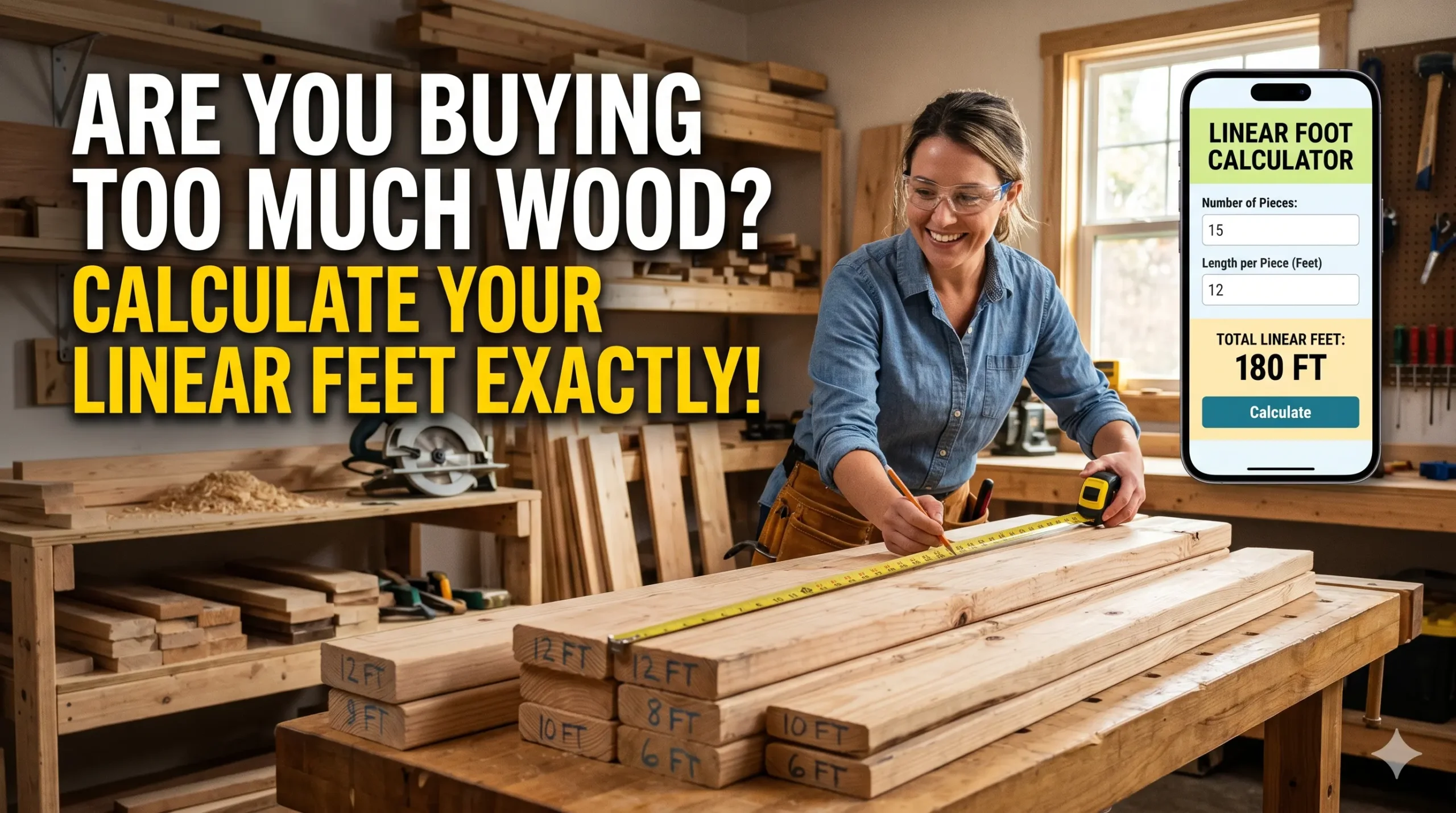
A linear foot calculator for wood helps you measure the length of wood in feet, which is useful when buying trim, molding, fence boards, railing, or other lumber sold by length. In simple terms, 1 linear foot equals 12 inches of wood length, and the width or thickness does not change the linear footage.
What Is a Linear Foot?
A linear foot is just a straight-line length measurement. For wood, it tells you how much total length you need, not how much area or volume the wood covers.
This is why it is commonly used for trim, molding, fascia boards, railing, and fence materials. These products are usually priced or ordered by length, so linear feet makes buying easier and more accurate.
How the Calculator Works
The formula is very simple:
Linear feet = Total length in inches ÷ 12
If your wood is already measured in feet, just add the lengths together. If the measurement is in inches, divide by 12 to convert it into linear feet.
Conversion Table
| Measurement | Conversion |
|---|---|
| 12 inches | 1 linear foot |
| 24 inches | 2 linear feet |
| 36 inches | 3 linear feet |
| 48 inches | 4 linear feet |
| 60 inches | 5 linear feet |
| 72 inches | 6 linear feet |
| 120 inches | 10 linear feet |
Why the Width Does Not Matter
The reason linear feet ignores width and thickness is that it measures only one dimension: length. A 1-inch-wide board and a 12-inch-wide board can both be 8 linear feet long if their length is the same.
This is also why linear feet are different from board feet. Board feet measure volume, so width and thickness matter there, but they do not matter in linear foot calculations.
When to Use Linear Feet for Wood
Use linear feet when you are buying or planning materials where the length is the main factor. Common examples include:
- Baseboards
- Crown molding
- Chair rail
- Trim and casing
- Fence rails
- Railing
- Decorative lumber
For flooring or panel sheets, square feet is usually more relevant because surface coverage matters more than straight length.
For rough lumber or hardwood pricing, board feet is often the correct unit because volume matters.
How to Measure Wood Correctly
- Use a tape measure to measure each straight section.
- If your project has multiple pieces, add them together before converting to linear feet.
- If your measurements are in inches, divide the total by 12.
- If the result is not a whole number, round up when buying material so you have enough for cuts, waste, and mistakes.
For example, if you need 85 inches of trim:
In practice, you would usually buy 8 linear feet or more to stay safe.
Example Calculation
Imagine you need wood for three wall sections:
- Section 1: 42 inches
- Section 2: 65 inches
- Section 3: 31 inches
Step 1: Add them first:
Step 2: Divide by 12:
So, you need 11.5 linear feet of wood, and buying 12 or 13 feet would be smarter if you expect cutting waste.
Linear Feet vs Board Feet
These two terms are often confused, but they are not the same.
| Feature | Linear Feet | Board Feet |
|---|---|---|
| What it measures | Length only | Volume (length × width × thickness) |
| Width matters? | No | Yes |
| Thickness matters? | No | Yes |
| Common use | Trim, molding, railing | Hardwood, rough lumber |
The simplest way to remember it:
- If you only care how long the wood is, use linear feet.
- If you care about how much lumber volume you are getting, use board feet.
Buying Tip for Wood Projects
When ordering wood, add extra material for cuts, damage, and fitting adjustments. Many trim and molding projects need additional length because corners, joints, and waste can increase the total you actually use.
A practical approach is to add around 10% to 15% extra for small projects, especially if the design includes angled cuts or repeated joints. That margin helps prevent shortages without overbuying too much.
FAQ
What is a linear foot of wood?
A linear foot of wood is 12 inches of length, regardless of the board’s width or thickness.
How do I calculate linear feet from inches?
Add all inches together and divide by 12.
Is a linear foot the same as a board foot?
No. A linear foot measures length only, while a board foot measures volume.
Can I use a linear foot calculator for trim?
Yes. Trim and molding are two of the most common uses for linear feet because they are sold by length.
Do I need to round up linear feet?
Yes, rounding up is usually safer because you may need extra wood for cuts, waste, or measurement errors.
Why do wood prices sometimes use board feet instead of linear feet?
Wood prices use board feet when the thickness and width matter to value, especially for hardwood lumber and rough-sawn boards.
Conclusion
A linear foot calculator for wood makes planning easier because it turns measurements into a simple length total. Once you understand that 1 linear foot equals 12 inches, you can estimate trim, molding, rails, and other wood materials with confidence.